
The Cage Is the Problem: What a Rat Experiment Reveals About Your Life
A 1970s experiment gave rats two choices: clean water or morphine. The isolated rats chose morphine until they died. The rats in Rat Park barely touched it. The only difference was the environment. Here's what that means for you.
Nobody put a gun to the rat's head.
They gave it an empty cage. A metal box. No toys. No space. No other rats. Just four walls and two water bottles. One filled with clean water. One laced with morphine.
The rat chose the morphine. And it kept choosing the morphine until it died.
For decades, this was the foundation of how we understood addiction. The drug was the villain. The substance was the trap. Once you touched it, you were done. Governments built policies around it. Schools taught it. Scientists repeated it.
Then in the late 1970s, a Canadian psychologist named Bruce Alexander looked at that experiment and asked the question nobody was asking.
What if the problem was never the drug?
What if it was the cage?
The Rat Park Experiment
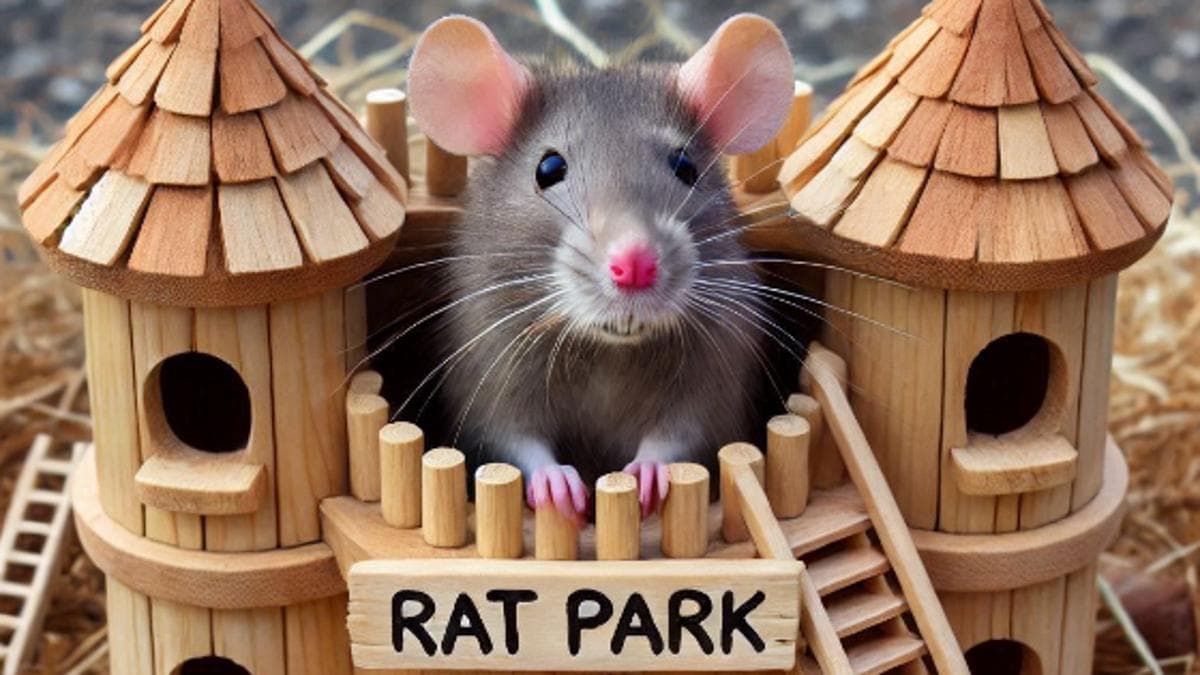
Alexander and his colleagues at Simon Fraser University built something radical. A large plywood enclosure, roughly 200 times the size of a standard lab cage. Inside: tunnels, platforms, running wheels, tin cans for hiding, wood chips for playing. Male and female rats living together. Babies everywhere. Connection. Stimulation. Purpose.
He called it Rat Park.
Same two water bottles. One clean. One laced with morphine. Same drug. Same access. Same biological wiring.
The rats in Rat Park barely touched the morphine.
In some of Alexander's trials, the caged rats consumed nearly 20 times more morphine than the Rat Park rats. Even when the morphine solution was sweetened to make it nearly impossible to resist, the rats with a rich environment still chose plain water.
Same substance. Same availability. Completely different behavior. The only variable that changed was the environment.
But Alexander went further. He took rats that had been isolated for 57 days, rats that had been drinking the morphine-laced water compulsively, and moved them into Rat Park. These were addicted rats by any definition. Dependent on the drug. Wired for it.
After some initial withdrawal symptoms, they stopped choosing the morphine. The environment rewired what the cage had broken.
This wasn't a minor finding. This was a direct challenge to the most fundamental assumption in addiction science: that the substance itself creates the dependency. Alexander's work suggested something far more radical. The environment is the dependency. The drug is just the symptom.
The Human Rat Park
If this were only about rats, it would be an interesting footnote in a psychology textbook. But there is a human version of this experiment. And it happened on a massive scale.
During the Vietnam War, roughly 20 percent of American soldiers were using heroin regularly. Not casually. Not recreationally. They were dependent. The United States government was terrified. They expected hundreds of thousands of addicted veterans flooding American streets when the war ended. They prepared treatment centers. They allocated billions in funding. They braced for a national crisis.
The Archives of General Psychiatry tracked these soldiers after they came home. What they found shocked everyone.
95 percent of them simply stopped.
No rehab. No withdrawal programs. No intervention. They went from a cage of war, isolation, fear, boredom, and disconnection back to homes with families, friends, communities, and meaning.
The environment changed. The behavior changed with it.
As journalist Johann Hari wrote in Chasing the Scream: "The opposite of addiction is not sobriety. The opposite of addiction is connection."
This reframes everything. Not just about drugs. About every compulsive behavior you've ever tried to white-knuckle your way out of.
Now Look at Your Life
You are probably reading this thinking, "I don't have an addiction problem."
Maybe not in the clinical sense.
But let me describe a cage and see if it sounds familiar.
The scrolling until 2 AM when you know you should be sleeping. The drink every night to take the edge off. The binge watching until your eyes burn and you can't remember what you even watched. The online shopping for things you forget about three days later. The opening of the fridge when you're not hungry. The refreshing of your inbox looking for something that is never there.
Nobody calls these addictions. But they function identically. Same neural pathways. Same dopamine loops. Same pattern of short-term relief followed by long-term emptiness.
Same cage. Different morphine.
You are not weak. You are not broken. You are not lacking discipline. You are responding, with perfect biological logic, to an environment that offers you nothing better than the numbing.
This is the part that most self-improvement advice gets completely wrong. It attacks the behavior. Delete the app. Use a screen timer. Try harder. White-knuckle through it. That is like taking the morphine bottle out of the cage and expecting the rat to be fine.
The rat doesn't need less morphine. It needs a better cage.
Why Willpower Always Loses
Here is the science behind why "just try harder" fails every single time.
Dr. Andrew Huberman, a neuroscientist at Stanford, has explained extensively how our brains are wired to seek dopamine from whatever source is most available. When your environment is low in natural reward (real connection, physical challenge, creative work, meaningful progress) your brain will find the path of least resistance to a dopamine hit.
That path is almost always your phone. Or the drink. Or the junk food. Or the mindless scroll.
You don't overcome this with more willpower. Research published in the Journal of Personality and Social Psychology by psychologist Roy Baumeister showed that willpower functions like a muscle: it fatigues with use. Every decision you make throughout the day, from what to eat for breakfast to whether to check Instagram, chips away at the finite reserve you have left for the choices that actually matter.
By evening, the tank is empty. And what surrounds you when the tank is empty is what you'll default to. If your environment is full of screens, junk food, and isolation, that's exactly what you'll consume. Not because you're weak. Because your biology is doing exactly what 200,000 years of evolution designed it to do: follow the path of least resistance to the nearest dopamine source.
The rats in Rat Park did not have more discipline than the caged rats. They were the same species. The same biology. The same brain chemistry. They just had a better room.
As I explored in how I hacked my brain to stop being lazy, the solution isn't fighting your biology. It's redesigning your environment so your biology works for you instead of against you.
The Environment-Identity Loop
There's a deeper mechanism at work here that goes beyond dopamine. Your environment doesn't just influence your behavior. It shapes your identity.
Neuroscience calls this the mirror neuron system. When you observe someone performing an action, the same neural circuits fire in your brain as if you were performing that action yourself. You don't just watch the people around you. Your brain literally simulates their patterns, their standards, their beliefs.
This is why the neuroscience of identity change always comes back to environment. Your brain's Reticular Activating System (RAS) filters reality based on what it expects to see. And what it expects to see is heavily influenced by what surrounds you every day.
Put yourself in a cage of isolation, comfort, and low standards, and your brain calibrates to that reality. Your RAS starts filtering out opportunities because they don't match the identity your environment has built. You stop seeing possibilities. You stop expecting more. You start calling that "being realistic."
Put yourself in a Rat Park, a rich environment of challenge, connection, growth, and high standards, and the opposite happens. Your mirror neurons simulate ambition. Your RAS starts scanning for opportunities. Your identity shifts not because you forced it, but because the environment made the shift inevitable.
As James Clear wrote in Atomic Habits: "Every action you take is a vote for the type of person you wish to become." But here's what most people miss: your environment determines which actions are available to vote with.
The Three Dimensions of Your Cage
Your environment isn't just your physical space. It operates on three levels, and most people only think about one of them.
1. Physical Environment
This is the obvious one. Your room. Your desk. Your kitchen. Your gym bag by the door or buried in the closet. Every physical object in your space is either a cue for a productive behavior or a cue for a destructive one. The junk food visible on the counter. The phone on the nightstand. The TV facing the couch. These aren't neutral. They're environmental triggers that your brain responds to automatically, without conscious thought.
The fix: Walk through your space tonight and ask one question about each element: "Does this feed me or numb me?" You don't have to change anything yet. Just see it clearly. Awareness is always the first crack in the cage.
2. Digital Environment
This is the cage most people never audit. Your phone is an environment. Your social media feeds are environments. Your email inbox is an environment. And they're engineered, by some of the smartest people on the planet, to keep you in the cage.
Every notification is a pellet of dopamine. Every infinite scroll is a morphine drip. Every algorithm is a cage wall designed to be invisible. The average person spends over 4 hours per day on their phone. That's 1,460 hours per year. That's 60 full days of your life, every year, inside someone else's cage.
The fix: Apply the same time management principles to your digital space. Batch your phone use. Remove apps that numb. Add friction between you and the scroll: put the phone in another room, use grayscale mode, delete social media from your phone and only access it on desktop. Every barrier you add between yourself and a bad digital environment buys your brain time to choose something better.
3. Social Environment
This is the most powerful and most difficult to change. The people you spend time with are the walls of your cage or the open fields of your Rat Park. Their standards become your standards. Their conversations become your inner dialogue. Their ambitions (or lack of them) calibrate what you believe is possible for yourself.
You become the average of the five people you spend the most time with. This isn't a motivational quote. It's neuroscience. Your mirror neurons make it biologically inevitable. If your circle complains constantly, you'll complain. If they settle, you'll settle. If they numb, you'll numb.
The fix: You don't necessarily need to cut people off. But you need to add. Add people who operate at a higher level. Add conversations that challenge your thinking. Add environments where the default behavior is growth, not comfort. As I wrote in how to get ahead of 99% of people, the bar is on the floor. Just surrounding yourself with people who are actively trying to improve puts you in rare company.
The One Thing You Can Do Today
I'm not going to give you a list of 17 steps. I'm going to give you one.
Walk through your environment tonight. Your room. Your phone. Your evening routine. Your friend group. And ask one question about each element:
"Does this feed me or numb me?"
That's it. You don't have to change anything yet. You don't have to delete anything, rearrange anything, or cut anyone off. Just see it clearly. Because awareness is always the first crack in the cage.
The rats in the isolated cages were not making a conscious decision to destroy themselves. They were simply responding to what was in front of them. So are you. So am I. So is everyone.
The question isn't "why can't I stop?" The question is "what am I not getting from my environment that I'm trying to get from the numbing?"
Connection. Challenge. Purpose. Growth. Belonging.
Once you name what's missing, you can start building for it instead of fighting against yourself.
Building Your Own Rat Park
The Rat Park experiment didn't just show that environment matters. It showed that environment is the primary variable. More than genetics. More than willpower. More than knowledge. More than desire.
Alexander's rats didn't need a lecture about the dangers of morphine. They didn't need a motivational poster on the cage wall. They didn't need to "find their why" or "set better goals." They needed tunnels to explore. Wheels to run on. Other rats to connect with. A space that made living more interesting than numbing.
You need the same thing. Not more information. Not more discipline. Not another productivity app or self-help book. You need an environment that makes the right choice the easy choice. One where growth is the default, not the exception. Where the people around you are building, not numbing. Where every room, every conversation, every challenge pulls you toward who you're becoming instead of who you've been.
This is why The 1% Club exists. Not as another app gathering dust on your phone. But as the environment designed on purpose to give you what the cage never could. Seven rooms covering every dimension of growth. Weekly live masterclasses. Direct access to the team. Weekly challenges that give you real momentum. And most importantly, a community of people who are building, not numbing.
The Rat Park study proved that when you change the environment, the behavior changes automatically. You don't need more discipline. You need a room full of people who make the right choice the obvious choice.
Stop decorating the cage. Build a Rat Park.